
Yes, a high-scoring English suggestion letter needs a clear structure, polite tone, specific examples, and actionable advice.
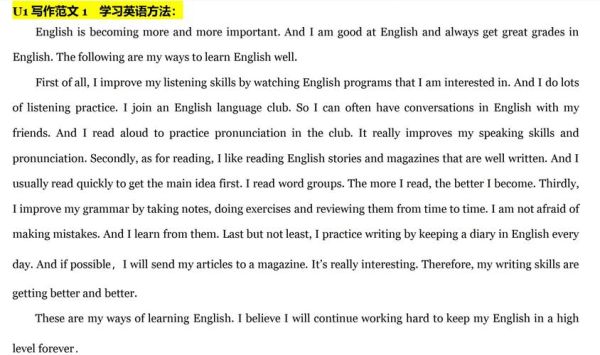
Why bother mastering the English suggestion letter?
Whether you are preparing for IELTS Writing Task 1 General, TOEFL independent writing, or simply want to complain constructively to your landlord, the ability to craft a concise yet persuasive suggestion letter is a life skill. It demonstrates critical thinking, cultural awareness, and professionalism.
What exactly is a suggestion letter?
A suggestion letter is a formal or semi-formal piece of writing in which the writer identifies a problem, explains its impact, and proposes one or more practical solutions. Unlike a complaint letter, it focuses on **improvement rather than blame**.
How do examiners score it?
- Task Achievement: Did you clearly state the problem and offer realistic suggestions?
- Coherence & Cohesion: Are your ideas logically ordered and connected with appropriate linking words?
- Lexical Resource: Have you used topic-specific vocabulary accurately and flexibly?
- Grammatical Range & Accuracy: Is there a mix of simple and complex sentences with minimal errors?
What is the proven 7-step template?
Step 1: Polite salutation
Dear Sir or Madam,
Dear Mr. Smith,
Avoid: “Hey,” “To whom it may concern,” which sound either too casual or outdated.
Step 2: Opening line that states the purpose
Template: “I am writing to offer some suggestions regarding …”
Variation: “I would like to put forward a few recommendations that could enhance …”
Step 3: Brief background or context
Provide just enough detail so the reader understands the situation without wading through back-story. One or two sentences are enough.

Step 4: Problem description
Use **objective language** and quantify when possible:
“Over the past month, the library has closed at 5 p.m. on weekdays, which has affected approximately 300 evening students.”
Step 5: Present two or three concrete suggestions
Structure:
1. Suggestion + benefit
2. Implementation idea + anticipated result
3. Optional alternative if budget is limited
Step 6: Offer further assistance
“I would be happy to volunteer for a trial period” or “Please let me know if any additional information is required.”
Step 7: Polite close
Yours faithfully,
Yours sincerely,
Sign off with your full name and, if relevant, your position or student ID.
How can I make my language more sophisticated?
Use formal verbs
Instead of “fix,” write **“rectify”**.
Instead of “help,” write **“facilitate”**.
Employ hedging for politeness
“It might be beneficial if …”
“Perhaps extending the deadline could …”
Include conditional structures
“Should the management agree, we could …”
“Were the schedule adjusted, students would …”
What are the most common mistakes?
- Over-generalising: “Everything is bad” lacks credibility.
- Sounding accusatory: Avoid “You never listen to students.”
- Offering vague advice: “Improve the service” is useless without specifics.
- Mixing registers: “Could ya plz extend the gym hours?” is inappropriate.
Can I see a band-9 sample?
Prompt: The college canteen closes at 4 p.m., which is inconvenient for students who have late classes. Write a letter to the canteen manager.
Dear Mr. Patel,
I am writing to offer some practical suggestions that could extend the usefulness of our college canteen beyond its current 4 p.m. closing time.
As a third-year engineering student, I often attend laboratory sessions that finish at 5:30 p.m. Many of my classmates and I then have no option but to purchase fast food off-campus, which is both expensive and unhealthy.
My first recommendation is to **keep at least one serving counter open until 6:30 p.m.** This modest extension would accommodate the evening cohort of roughly 400 students without requiring full kitchen operations. To offset additional staffing costs, the canteen could introduce a simplified evening menu featuring sandwiches, salads, and pre-cooked meals prepared earlier in the day.
Secondly, **implementing a pre-order app** would allow students to place orders during afternoon breaks and collect them at a designated time. Such a system has already reduced waiting times by 30% in the neighbouring Business School canteen.
Should these measures prove successful, the canteen might consider a trial period of hot-dinner service once a week, gauging demand before committing further resources.
I would be delighted to assist in surveying student preferences or testing the proposed app.
Thank you for considering these suggestions.
Yours sincerely,
Aisha Khan
Student ID: 21ENG045
How can I practise effectively?
1. **Timed writing:** Set 20 minutes and stick to the word limit of 150–200 words for exam scenarios.
2. **Peer review:** Swap letters with a study partner and score each other using the four IELTS criteria.
3. **Error log:** Keep a notebook of recurring grammar mistakes and aim to eliminate one each week.
4. **Vocabulary bank:** Maintain a spreadsheet of formal verbs, hedging phrases, and linking words.
What if the recipient is a friend?
Lower the formality but keep the structure:
“Hey Sam, I’ve been thinking about our group project deadlines. How about we set mini-milestones every Friday? It might stop last-minute panic.”
Quick checklist before you hit send
- Have I stated the purpose in sentence one?
- Are my suggestions **measurable and realistic**?
- Is the tone consistently polite?
- Have I proofread for spelling and subject-verb agreement?
Where can I find more prompts?
Past IELTS General Training papers, Cambridge English Write & Improve, and university writing centres all publish authentic tasks. Rotate topics—transport, facilities, housing, workplace—to build versatile vocabulary.




还木有评论哦,快来抢沙发吧~