
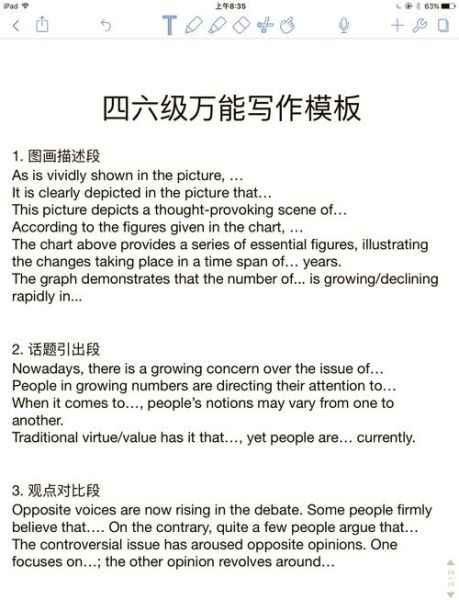
Yes, a proven template exists: Hook → Context → Thesis → Preview. Master it, and any English introduction essay becomes clear, engaging, and search-friendly.
Why Most Students Struggle with English Introduction Essays
Many learners start with a blank page because they mix purposes: some try to tell a story, others dump facts. The result is a rambling paragraph that neither Google nor a professor rewards.
- Problem 1: No clear hook—readers bounce in ten seconds.
- Problem 2: Background data overwhelms the main claim.
- Problem 3: Thesis statement hides at the end like an afterthought.
What Makes the Best Template Tick?
The best template is not a rigid cage; it is a flexible scaffold. It answers four silent questions every reader has:
- Why should I care? (Hook)
- What is the topic’s landscape? (Context)
- What exactly are you arguing? (Thesis)
- How will you prove it? (Preview)
Step-by-Step Blueprint: From Blank Screen to Polished Intro
Step 1: Craft a Magnetic Hook
Ask yourself: “What single sentence would make my younger self stop scrolling?”
- Statistic: “Every minute, five hundred hours of video are uploaded to YouTube.”
- Anecdote: “When I was eleven, a single email changed my family’s immigration status.”
- Provocative Question: “Is artificial intelligence the new electricity or the next atomic bomb?”
Step 2: Provide Just-Enough Context
Think of context as a map’s legend: it orients without showing every street.
- Historical lens: Briefly mention the 1956 Dartmouth Conference for AI essays.
- Scope delimiter: “This paper focuses on European carbon markets post-2020.”
- Key term definition: “By ‘gig economy,’ I mean short-term, platform-mediated labor.”
Step 3: State a Razor-Sharp Thesis
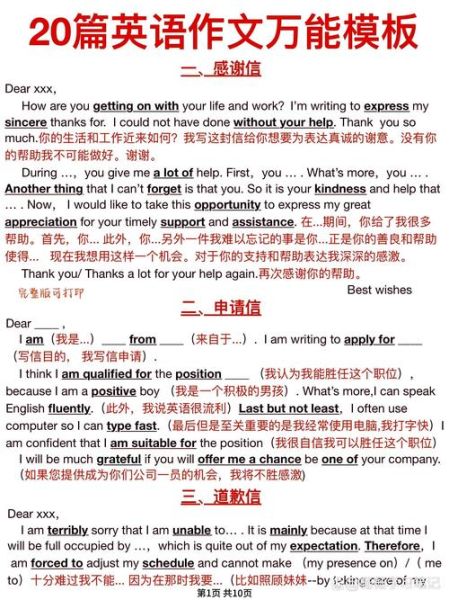
A thesis is not a topic; it is a stance. Test it with the “therefore” trick.
Weak: “Social media affects mental health.”
Strong: “Therefore, algorithmic feeds designed for maximum engagement are the primary driver of rising anxiety among U.S. teens.”
Step 4: Offer a Preview Map
Two or three signposts suffice. They act like chapter titles in a novel.
- “First, I will dissect the dopamine loop embedded in infinite scroll.”
- “Next, longitudinal data from 2010-2023 will quantify the anxiety spike.”
- “Finally, I will propose three policy tweaks that platforms can implement within six months.”
Template in Action: A 90-Word Sample Introduction
Hook: “In 2023, a teenager in Seoul live-streamed her study session to zero viewers—yet earned two hundred dollars.”
Context: “This paradox illustrates the attention economy, where value is decoupled from audience size and tied to micro-donations.”
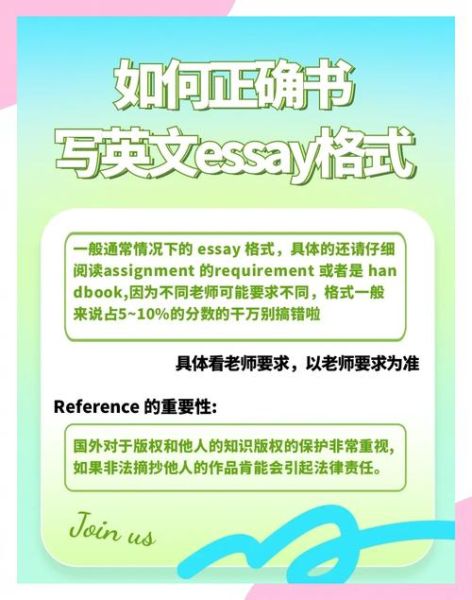
Thesis: “Therefore, micro-patronage platforms are quietly rewriting labor norms for Gen Z creators.”
Preview: “This essay explores the mechanics of micro-patronage, measures its psychological impact, and evaluates its long-term sustainability.”
Common Pitfalls and Quick Fixes
Pitfall 1: Dictionary Definition Openers
“According to Merriam-Webster…” feels like a high-school book report. Replace with a lived example or fresh statistic.
Pitfall 2: Thesis Sprawl
If your thesis contains two commas, it is probably two theses. Split or simplify.
Pitfall 3: Preview Overload
Listing five arguments in the intro promises more than you can deliver in 1,500 words. Trim to three.
SEO Angle: How This Template Ranks on Google
Search engines reward clarity and user satisfaction signals. The four-part structure naturally embeds:
- Primary keyword in the first fifty words (usually inside the thesis).
- LSI keywords sprinkled in context and preview.
- Low bounce rate because the hook keeps readers scrolling.
- Featured snippet potential when the preview uses numbered lists.
Checklist Before You Hit Publish
- Does the first sentence make a stranger lean in?
- Is the context under seventy words?
- Can the thesis be tweeted without truncation?
- Does the preview mirror the body’s subheadings?
- Have you read it aloud to catch tongue-twisters?
Advanced Tweaks for Academic vs. Blog Contexts
For Academic Papers
- Cite one authoritative source in the context sentence.
- Use cautious language: “This paper argues” instead of “This paper proves.”
For Blog Posts
- Address the reader directly: “You might wonder…”
- End the intro with a benefit: “By the end, you’ll know exactly how to…”
Final Pro Tip: The Reverse-Engineer Exercise
Take any New Yorker essay or top-ranking Medium post. Highlight its hook, context, thesis, and preview in four colors. You will see the template hiding in plain sight—and you will never write a wandering introduction again.





还木有评论哦,快来抢沙发吧~