
Desertification is the silent crisis reshaping our planet, yet many students still wonder how to turn this vast topic into a compelling English essay. Below, you will find a step-by-step guide that not only answers the question “how to stop desertification essay” but also equips you with the vocabulary, structure, and critical thinking tools needed to score high in any academic writing task.
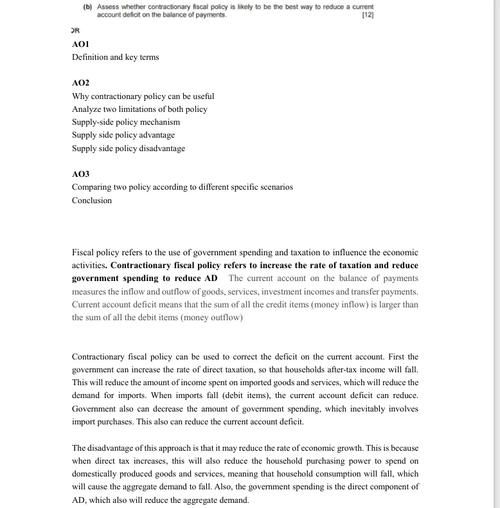
What Exactly Is Desertification?
Desertification is **the persistent degradation of dryland ecosystems** caused by both natural climate variability and human activities such as overgrazing, deforestation, and unsustainable irrigation. It is not the natural expansion of existing deserts; rather, it is **the loss of biological or economic productivity** in once-fertile areas.
Why Should an English Essay Focus on Desertification?
• **Global relevance**: Over 2 billion people live in drylands.
• **Interdisciplinary angles**: biology, economics, politics, and ethics.
• **Rich vocabulary**: terms like “aridity index,” “land tenure,” and “carbon sequestration” can showcase lexical range.
• **Exam popularity**: IELTS, TOEFL, and Cambridge First often include environment-themed prompts.
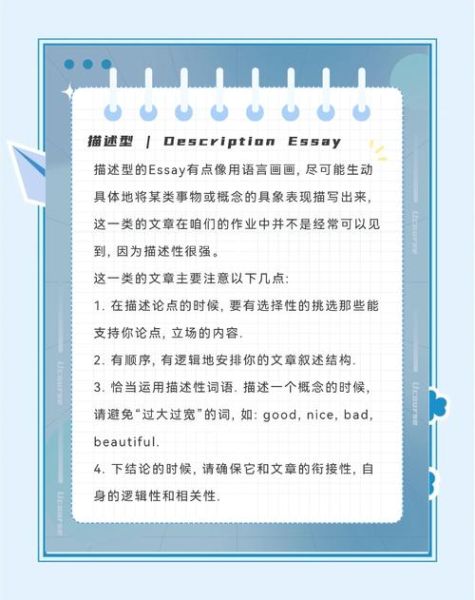
How to Structure a High-Scoring Essay
1. Hook the Reader with a Striking Statistic
Begin with a fact that jolts the reader awake: “Every year, **12 million hectares**—an area larger than Switzerland—turn into new desert.”
2. Provide a Concise Definition
Follow the hook with a one-sentence definition to show clarity of thought.
3. Map the Body Paragraphs
• **Causes**: human vs. natural.
• **Consequences**: ecological, social, economic.
• **Solutions**: policy, technology, community action.
Each section can be a separate paragraph or merged into thematic blocks.
4. End with a Forward-Looking Thesis
“Only through integrated strategies that blend indigenous knowledge with cutting-edge science can we reverse desertification before it becomes irreversible.”
Which Vocabulary Items Impress Examiners?
• **Anthropogenic degradation**
• **Albedo feedback loops**
• **Silvopastoral systems**
• **Payment for ecosystem services (PES)**
Sprinkle these terms naturally; do not force them into every sentence.
How to Integrate Data Without Plagiarizing
Instead of copying “According to the UNCCD…,” paraphrase: “The United Nations Convention to Combat Desertification **warns that 135 million people may be displaced by 2045** if current trends persist.” Always cite the source in footnotes or a reference list.
Sample Body Paragraph: Causes
While prolonged droughts certainly exacerbate soil erosion, **human agency remains the dominant driver**. Overgrazing strips vegetation cover, exposing topsoil to wind and water erosion. In the Sahel, herds have tripled in size since 1970, yet rangeland productivity has halved. Similarly, **groundwater overdraft for cash crops** like cotton lowers the water table, causing native shrubs to wither. These intertwined pressures create a feedback loop: less vegetation means higher surface temperatures, which in turn accelerates moisture loss.
Sample Body Paragraph: Solutions
Reversing desertification demands **polycentric governance**. China’s “Great Green Wall” planted 66 billion trees, but monoculture poplars proved vulnerable to pests. By contrast, Niger’s farmer-managed natural regeneration (FMNR) revived **5 million hectares** by protecting sprouting stumps. The key difference? **Community ownership**. When farmers have secure land tenure, they invest in long-term stewardship. Complementing grassroots efforts, satellite-based early-warning systems now detect vegetation stress **six weeks before visible symptoms**, enabling targeted grazing restrictions.
How to Craft a Powerful Conclusion
Avoid mere summary. Instead, **project a vision**: “Imagine a 2050 where drones seed native grasses, blockchain tracks soil carbon credits, and nomadic herders use GPS to rotate livestock sustainably. Such a mosaic of innovations is not utopian; pilot projects across Kenya and Australia already prove its viability.” Ending on an actionable note leaves the examiner with a memorable impression.
Common Pitfalls and How to Dodge Them
• **Pitfall**: Listing solutions without prioritization.
**Fix**: Rank interventions by cost-effectiveness—e.g., FMNR ($20/ha) vs. mechanical reforestation ($2,000/ha).
• **Pitfall**: Overusing passive voice.
**Fix**: Write “Governments must incentivize” instead of “Incentives must be provided.”
• **Pitfall**: Ignoring counterarguments.
**Fix**: Acknowledge that large-scale solar farms can reduce albedo, then explain how dual-use agrivoltaics mitigate this risk.
Self-Check Before Submission
Ask yourself:
• Does every paragraph link back to the thesis?
• Have I varied sentence length to maintain rhythm?
• Are statistics rounded to two significant figures for readability?
• Is the tone formal yet engaging, avoiding clichés like “since the dawn of time”?
Quick Reference: 5 Essay Starters You Can Adapt
1. “From the dust storms of the 1930s American Dust Bowl to today’s expanding Gobi, desertification has never been a distant threat.”
2. “When land dies, so do livelihoods—yet the death is slow enough to ignore until it is too late.”
3. “Picture a child in Mali walking 12 kilometers daily for water that tastes of salt and regret.”
4. “If climate change is the planet’s fever, then desertification is its creeping paralysis.”
5. “Satellites capture the story in pixels of brown: once-green pixels surrendering to beige.”
Linking Phrases for Cohesion
• **To signal cause**: “Owing to chronic firewood shortages, women venture farther each day, stripping bark from the last remaining acacias.”
• **To contrast**: “Whereas government schemes often falter, grassroots cooperatives flourish.”
• **To exemplify**: “Take the Loess Plateau: after decades of terracing and reseeding, sediment flow into the Yellow River dropped by 90%.”
Final Touches: Proofreading Checklist
☐ Spell-check “desertification” vs. “desertization.”
☐ Ensure subject–verb agreement with collective nouns (“data show,” not “data shows”).
☐ Replace weak intensifiers (“very big problem”) with precise adjectives (“pervasive ecological collapse”).
☐ Verify that every citation follows APA, MLA, or Chicago style consistently.
By following this roadmap, you will not only master the art of writing about desertification in English but also contribute to a global conversation that desperately needs articulate voices.






还木有评论哦,快来抢沙发吧~