
What does “respecting others” really mean in an English essay?
It means **acknowledging every person’s inherent worth** while using language that protects their dignity, even when you disagree. ---Why is respect crucial in academic writing?
- **Academic credibility**: Polite, inclusive language shows you have done balanced research.
- **Reader trust**: Audiences are more receptive when they do not feel attacked.
- **Global classrooms**: Essays are read by peers from many cultures; respect prevents unintended offense.
How can I choose respectful vocabulary?
**Replace biased labels with neutral terms.** Instead of “fanatics,” write “individuals with strong convictions.” Instead of “the elderly,” prefer “older adults.” **Avoid absolutes** such as “always” or “never,” which can sound dismissive. ---Sentence-level techniques that show respect
1. **Use hedging language**: “The data suggests…” rather than “This proves…” 2. **Employ passive voice sparingly** to focus on actions, not blame: “Mistakes were made.” 3. **Include attributive tags**: “According to Dr. Liu…” credits the source and softens critique. ---Structuring paragraphs to maintain courtesy
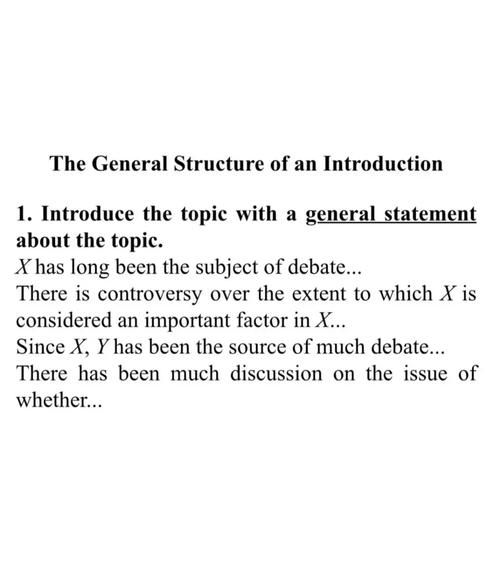
Point–Counterpoint–Bridge method
Point: Present the view you will question.
(图片来源网络,侵删)
Counterpoint: Introduce respectful disagreement with evidence.
Bridge: Find common ground or shared values before moving on.
---Handling sensitive topics without offending
Ask yourself: “Would I say this directly to the person’s face?” If the answer is no, **revise the sentence**. When discussing race, gender, religion, or disability, **cite lived experiences** from reputable first-person sources rather than speaking for the group. ---Examples: respectful vs. disrespectful sentences
| Disrespectful | Respectful |
|---|---|
| People who refuse vaccines are selfish. | Some individuals decline vaccination due to personal or cultural concerns, which public-health campaigns aim to address through education. |
| Teenagers today are addicted to screens. | Many adolescents spend significant time on digital devices, reflecting broader societal shifts in communication. |
How do I cite opposing views respectfully?
Paraphrase first, then quote sparingly. Example: While Miller (2021) contends that remote learning reduces academic integrity, **other scholars emphasize its flexibility for working students** (Patel, 2022). This structure **acknowledges Miller’s stance without ridicule** and introduces a balanced rebuttal. ---Polishing tone in the conclusion
Avoid triumphalist language like “It is obvious that…” Instead, write: “The evidence leans toward X, yet continued dialogue with Y’s proponents remains essential for holistic solutions.” Such phrasing **leaves intellectual space** for further respectful discussion. ---Quick checklist before submission
- □ Have I replaced any generalizations with specific, sourced statements?
- □ Do my pronouns include all identities neutrally (they/them when gender is unknown)?
- □ Are my citations formatted so that original authors receive clear credit?
- □ Did I read the draft aloud to catch unintended sarcasm or condescension?
Common pitfalls and how to fix them
Pitfall: Using quotation marks for so-called emphasis, implying scorn. Fix: Remove scare quotes or rephrase to convey critique through evidence. Pitfall: Over-apologizing, which can sound insincere. Fix: State disagreement directly but politely, supported by data. ---Respectful language evolves—stay updated
Follow style guides such as APA’s Inclusive Language Guidelines or the Conscious Style Guide. Subscribe to academic blogs that announce **terminology shifts** (e.g., “Latinx” vs. “Latine”). Revisit older essays annually to **refresh wording** in light of new norms. ---Practice exercise
Take a paragraph from your last essay that critiques an author’s view. Rewrite it using the Point–Counterpoint–Bridge method, integrating at least one hedging phrase and one inclusive pronoun. Read both versions to a peer and ask which feels more respectful; refine accordingly. ---Final thought
Respect in English essays is not a cosmetic filter—it is **the ethical backbone** of scholarly conversation. Master it, and your arguments gain both force and grace.
(图片来源网络,侵删)
版权声明:除非特别标注,否则均为本站原创文章,转载时请以链接形式注明文章出处。



还木有评论哦,快来抢沙发吧~