
Start with the author’s full name, the novel’s title in italics, and the year of first publication. Then state the genre and primary theme in one crisp sentence.
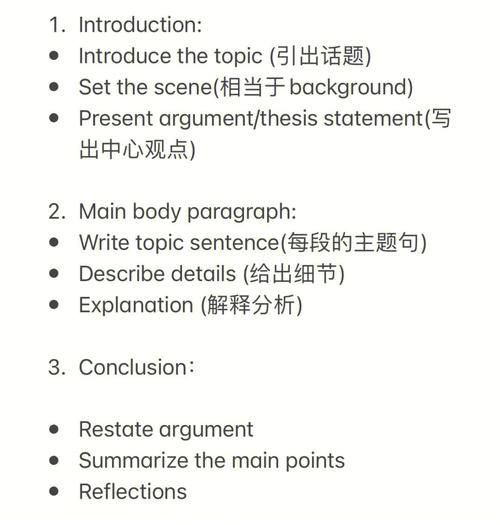
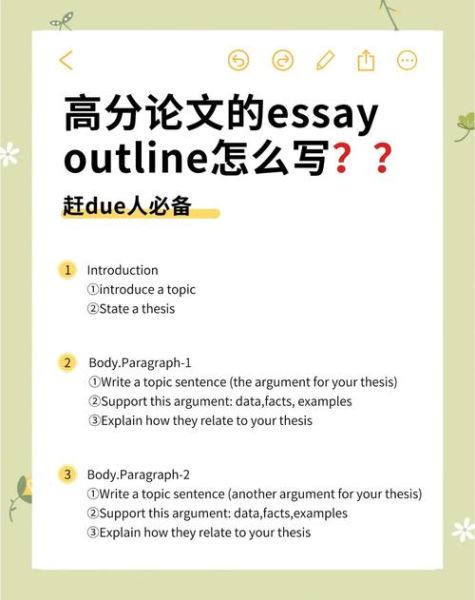
Why a structured approach matters
Readers decide within seconds whether your essay is worth their time. A clear scaffold keeps them oriented and prevents digressions.
Core elements to weave into every introduction
- Setting hook: one vivid sensory detail that places the reader inside the story world.
- Protagonist snapshot: age, social position, and one defining desire.
- Central conflict: what stands between the protagonist and that desire.
- Narrative voice: first-person confessional, omniscient observer, or unreliable trickster?
- Thematic lens: the abstract question the novel keeps asking.
How do I choose the perfect opening line?
Ask yourself: which single moment captures both character and theme? Example: instead of “Jane Eyre is an orphan,” write “Ten-year-old Jane shivers behind a scarlet curtain, already rehearsing the word ‘no’ that will shape her life.”
Step-by-step template for a 150-word introduction
- Sentence 1: sensory hook.
- Sentence 2: author + title + year + genre.
- Sentence 3: protagonist + desire.
- Sentence 4: antagonist force.
- Sentence 5: thematic question.
Common mistakes and how to dodge them
Mistake 1: summarizing the entire plot.
Fix: limit yourself to the inciting incident.
Mistake 2: vague adjectives like “interesting” or “powerful.”
Fix: swap them for concrete nouns and verbs.
Mistake 3: ignoring narrative voice.
Fix: quote one short passage that showcases tone.
Sample introduction for “The Great Gatsby”
Across the bay, a green light trembles on Daisy Buchanan’s dock, beckoning like a promise money might keep. In F. Scott Fitzgerald’s 1925 novel The Great Gatsby, self-invented millionaire Jay Gatsby throws dazzling parties to reclaim a lost love, yet the old-money world of East Egg keeps sliding its velvet rope between them. What price, the novel asks, does America demand for its dream of perpetual reinvention?
How long should the introduction be in a 1,000-word essay?
Aim for 12–15 percent of the total word count. For 1,000 words, that is 120–150 words—enough to entice, not enough to exhaust.
Using secondary sources without sounding like SparkNotes
Blend paraphrase with brief quotation. Example: As critic Sarah Churchwell observes, Gatsby’s mansion is “a stage set for a drama of desire,” a metaphor that underscores the theatricality of class performance.
Checklist before you submit
- Title italicized every time it appears.
- Author’s first and last name on first mention; last name only afterward.
- No spoiler beyond the first third of the book.
- At least one concrete image or quoted phrase.
- Theme stated as an open question, not a moral lesson.
Advanced tweak: the circular close
End your essay by echoing the sensory hook from the introduction, now transformed by the story’s events. If the intro began with “green light trembles,” the conclusion might note how the light has “faded to a dull, unreachable star,” reinforcing the theme of disillusionment.
What if the novel has multiple narrators?
Signal the frame narrator first, then the embedded storyteller. Example: In Mary Shelley’s 1818 novel Frankenstein, Arctic explorer Robert Walton relays the tragic tale told by Victor Frankenstein, whose own narrative contains the creature’s anguished monologue. This nested structure warns that every story is filtered through human fallibility.
Quick vocabulary boosters for analytical tone
- Instead of “shows,” try “dramatizes,” “foregrounds,” “renders.”
- Instead of “talks about,” use “interrogates,” “problematizes,” “dissects.”
- Instead of “important,” pick “pivotal,” “seminal,” “overarching.”
Final touch: read aloud for rhythm
Good introductions have cadence. Read yours aloud; if you stumble, shorten or re-punctuate until the sentence flows like spoken thought.

还木有评论哦,快来抢沙发吧~