
为什么“做家务”是英语作文高频题?
每逢期中、期末或中考、高考,命题老师总爱把“做家务”塞进写作任务。原因很简单:
- 贴近生活,人人有话说;
- 能考察动词短语、时态、情态动词等语法点;
- 容易升华到“责任”“感恩”等价值观。
写前准备:三步锁定素材
1. 头脑风暴:把家务清单列成英文
先问自己:我做过哪些家务?把中文瞬间翻译成英文,写在草稿纸上:
- do the dishes
- fold the laundry
- mop the floor
- water the plants
- take out the trash
2. 选“高光时刻”而非流水账
与其罗列十件小事,不如聚焦一次“最难忘”的经历。例如: 第一次给全家做早餐,结果把鸡蛋煎成“黑炭”。 故事性强,老师一眼记住。
3. 情感提炼:从“辛苦”到“成长”
自问:做完家务后我最大的感受是什么? 答案可能是:“I felt my parents’ burden lighten, and my heart grow taller.” 把这句放在结尾,瞬间升华。
结构模板:四段式黄金框架
| 段落 | 任务 | 常用句型 |
|---|---|---|
| 第一段 | 背景+任务 | Last Sunday, my mom asked me to... |
| 第二段 | 过程细节 | First, I... Then, I... Finally, I... |
| 第三段 | 困难+解决 | At first, the mop was too heavy, so I... |
| 第四段 | 收获+展望 | Through this experience, I learned that... |
语言升级:让普通句子“亮”起来
1. 动词替换
普通:I cleaned the table. 升级:I wiped every crumb off the table until it shone like a mirror.
2. 副词点缀
普通:I cooked noodles. 升级:I patiently stirred the noodles so they wouldn’t stick to the pot.
3. 比喻修辞
普通:I was tired. 升级:My arms felt like wet towels, heavy and dripping with sweat.
高频语法点:考官最爱看的三种
- 现在完成时:I have never realized that washing dishes could be so soothing.
- 情态动词:I should have listened to Mom’s tips earlier.
- 被动语态:The floor was swept, the windows were polished, and a sweet smell was floating in the air.
易错警示:90%同学踩过的坑
- 把“做家务”直译成“do housework”没错,但全文重复十遍就显单调。可替换:handle chores, tackle housework, take on household duties。
- 时态混乱:背景用过去时,感悟用现在时,千万别一句里混用。
- 忽略衔接词:句子之间加meanwhile, therefore, surprisingly,逻辑立刻顺滑。
高分范文:120词示范
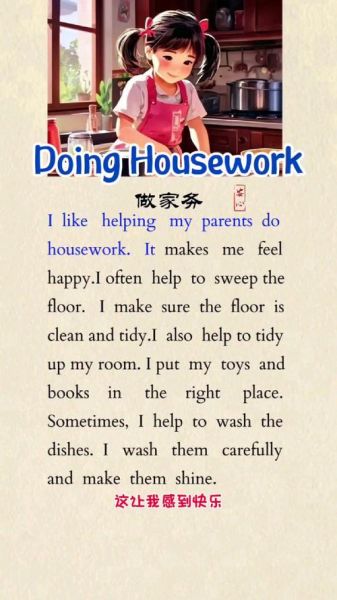
Last Saturday, my parents were out shopping, leaving me in charge of the house. First, I gathered the courage to cook fried rice. I chopped carrots clumsily, the knife slipping twice. Then, I heated oil and poured in the eggs; they bubbled like golden clouds. After adding rice, I realized I had forgotten salt! Luckily, a pinch of soy sauce saved the day. While the rice sizzled, I rushed to fold the laundry. The shirts smelled of sunshine, and I felt a warm pride rising in my chest. When my parents returned, they praised the aroma and my beaming smile. That night, I wrote in my diary: “Chores are not burdens; they are bridges to love.”
自问自答:考场时间紧,如何快速成文?
Q:只有15分钟,怎么写? A:用“2-5-3-2”法——2分钟列提纲,5分钟写第二段细节,3分钟写困难与解决,2分钟升华结尾,剩下3分钟检查拼写。
Q:词汇量小,怕出错? A:牢记万能三件套:make, take, get。 例:make breakfast, take out the trash, get the floor clean。简单却地道。
拓展练习:把范文改成日记体
把原文第一人称改为“Dear Diary,”,时态换成一般现在时,立刻变身日记。例如: Dear Diary, Today I decide to surprise Mom. I chop the carrots, fry the eggs, and dance around the kitchen. 练习后,你会掌握两种文体的切换技巧。
终极提醒:写完一定要朗读
朗读能发现90%的语法错误和别扭搭配。把作文读给同桌听,如果对方能复述你的故事,说明逻辑清晰;如果他在某处皱眉,立刻修改。 好作文不是写出来的,是改出来的。
还木有评论哦,快来抢沙发吧~